My Inspiration Board: The Way of Seeing, Thinking, and Making
- 2026-08-31
- Design Research, Visual Perception, Creative Coding, Material Exploration
My Inspiration Board: The Way of Seeing, Thinking, and Making
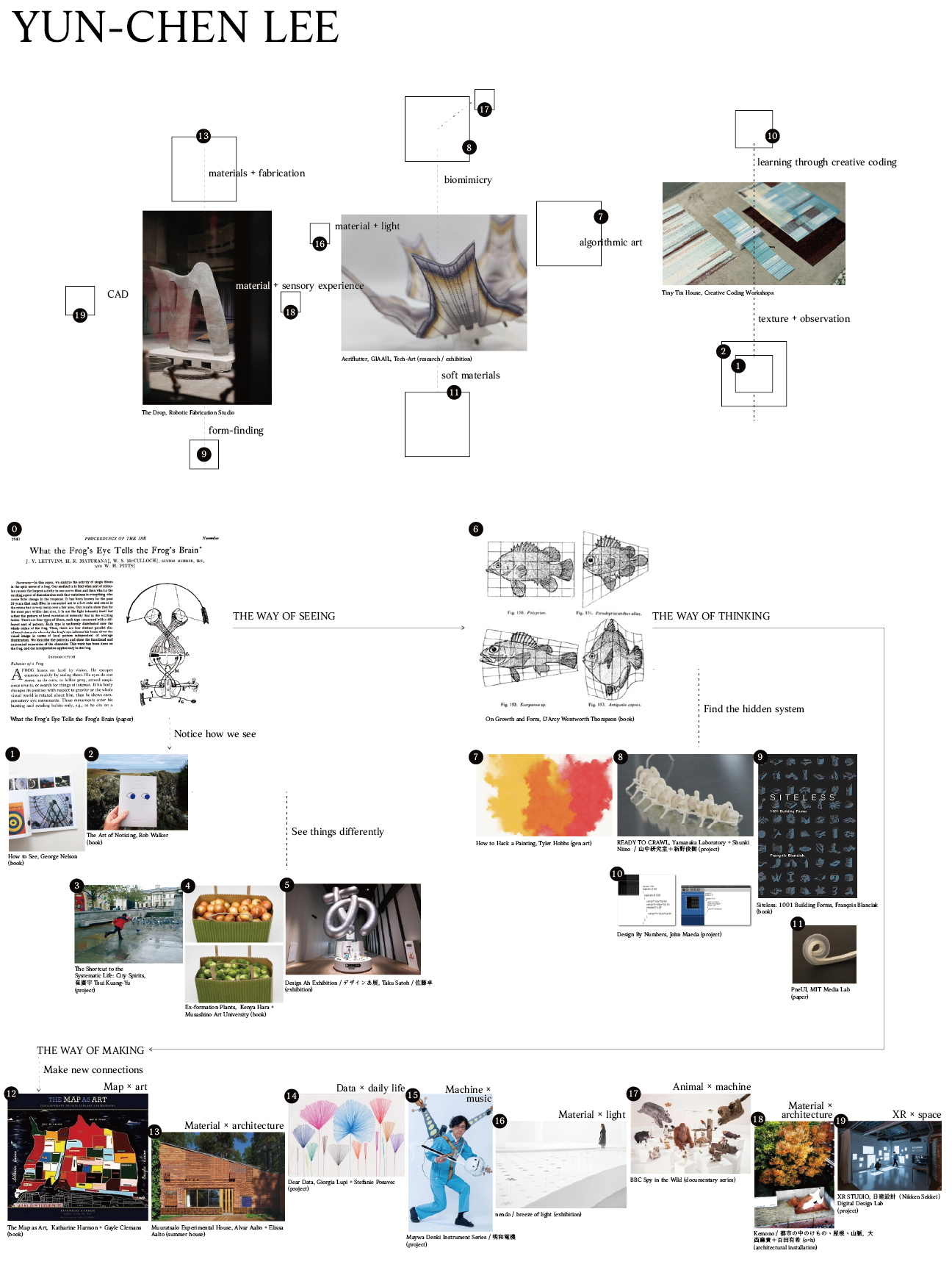
本文介紹一張將二十個參考案例整理為三個相互連結方向的靈感版:觀看的方式、思考的方式,以及製作的方式。第一組探討觀察、感知,以及如何讓熟悉的物件重新變得陌生。第二組研究自然、演算法、運算與回應式材料中的隱藏系統。最後一組則探索藝術、建築、資料、機械、光、動物與延展實境之間的連結。這些案例共同描述一種建立在細緻觀察、系統性思考與實驗性製作上的設計實踐。
This article presents an inspiration board that organizes twenty references into three connected areas: the way of seeing, the way of thinking, and the way of making. The first group studies observation, perception, and ways of making familiar objects appear unfamiliar. The second group examines hidden systems in nature, algorithms, computation, and responsive materials. The final group explores connections across art, architecture, data, machines, light, animals, and extended reality. Together, these references describe a design practice based on careful observation, systematic thinking, and experimental making.
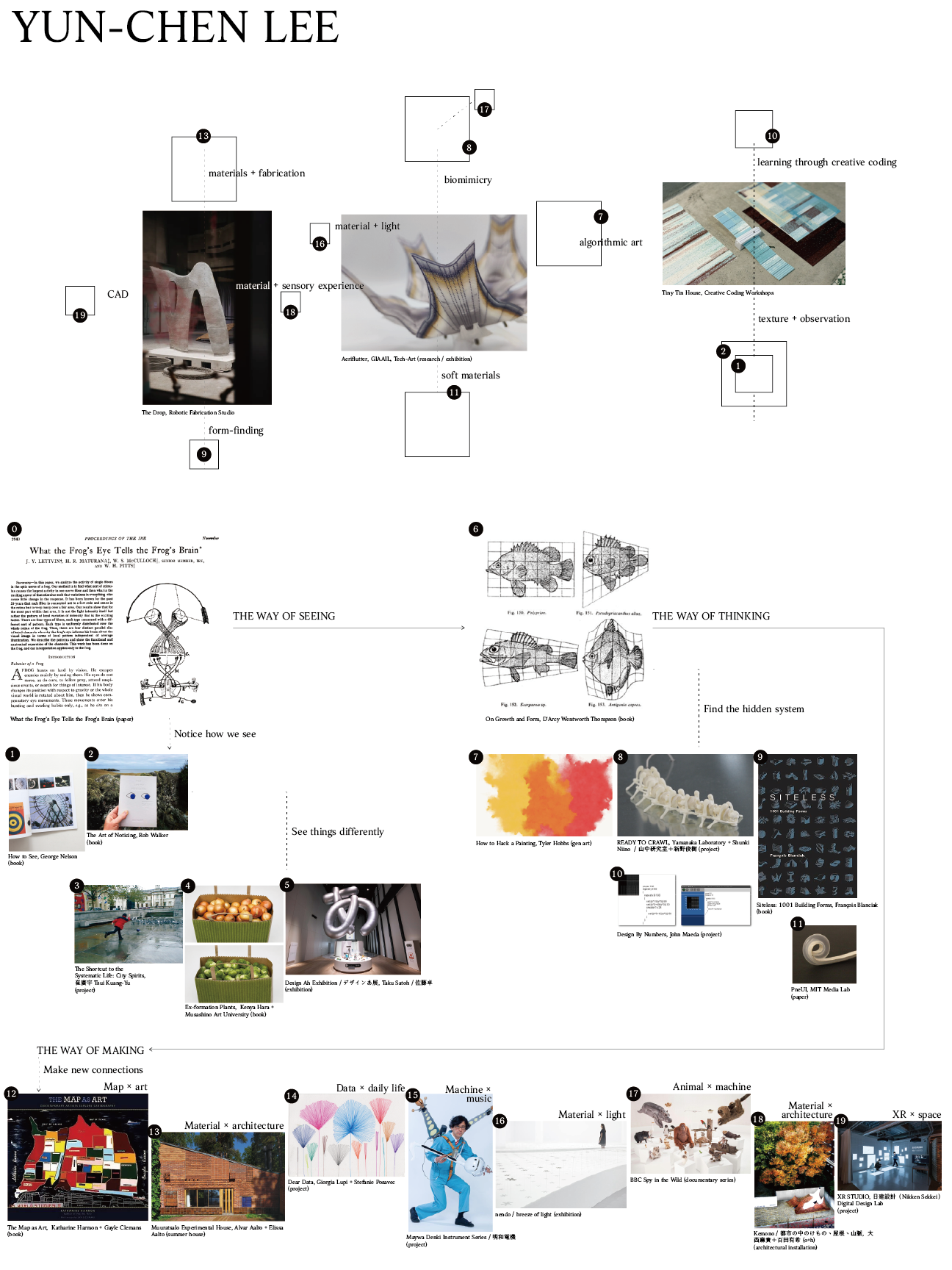
The Way of Seeing: Learning How to See
0. What the Frog’s Eye Tells the Frog’s Brain
Jerome Lettvin, Humberto Maturana, Warren McCulloch, and Walter Pitts published What the Frog’s Eye Tells the Frog’s Brain in 1959. The paper studies how a frog’s visual system gives priority to some information over other information. It makes me think about how our senses shape the way we understand the world.
Read the paper on IEEE Xplore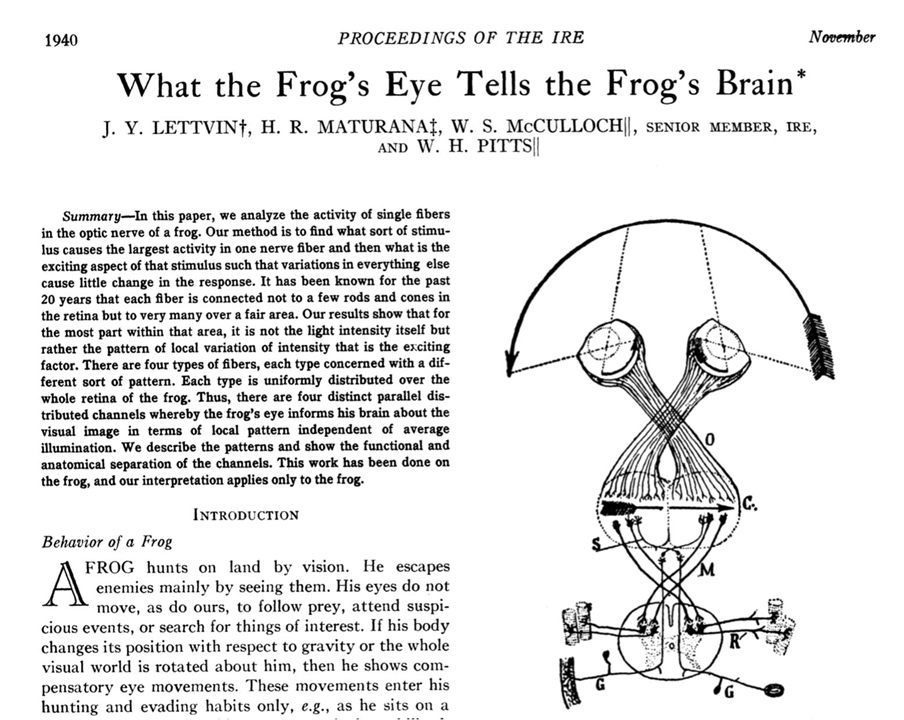
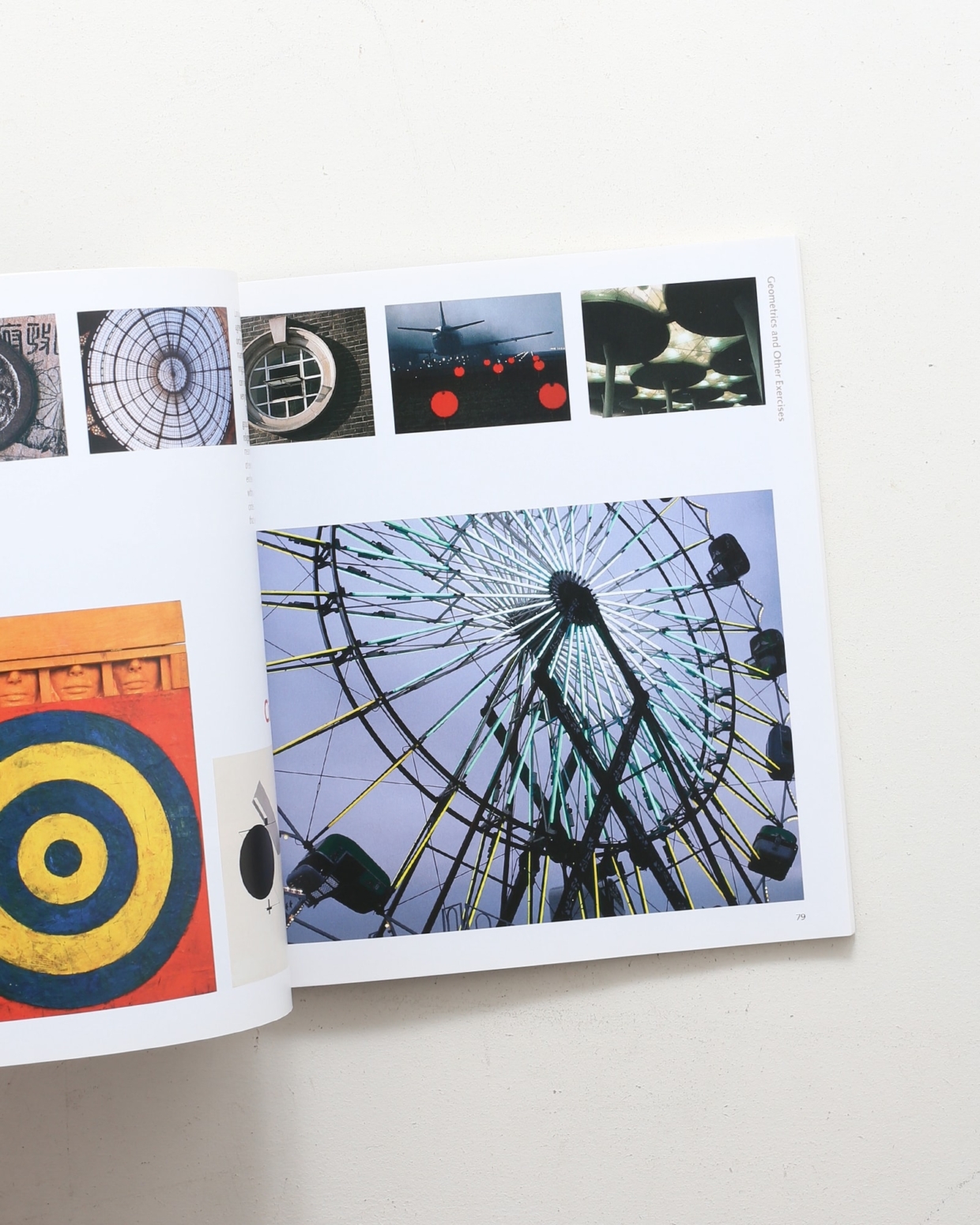
1. How to See — George Nelson
George Nelson’s 1977 book How to See: Visual Adventures in a World God Never Made asks readers to pay attention to everyday things that are often ignored. I am interested in its invitation to learn how to see again.
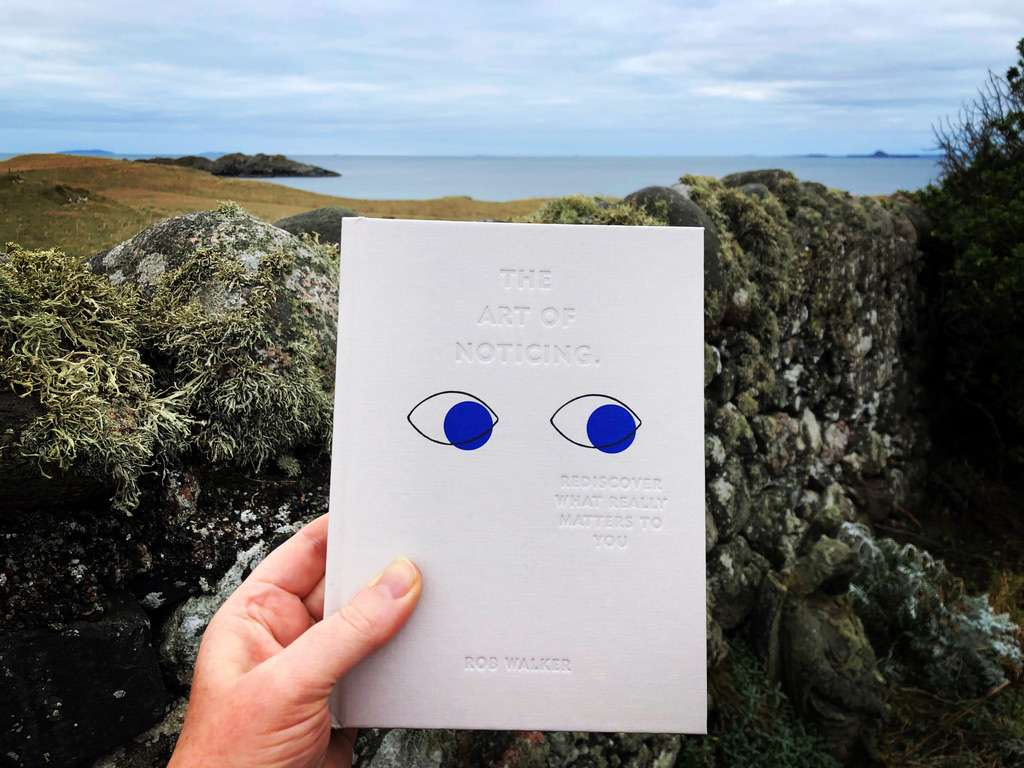
2. The Art of Noticing — Rob Walker
Rob Walker’s The Art of Noticing presents different ways to observe everyday environments. The book treats attention as a skill that can support creativity. For me, observation can also be a creative practice.
3. The Shortcut to the Systematic Life: City Spirits — Tsui Kuang-Yu
Tsui Kuang-Yu’s 2005 action and single-channel video project interacts with ordinary urban spaces in unusual ways. These actions make familiar places appear strange and reveal different ways of reading the city.
View City Spirits on the artist’s website4. Ex-formation Plants: UNE — The Agricultural Texture
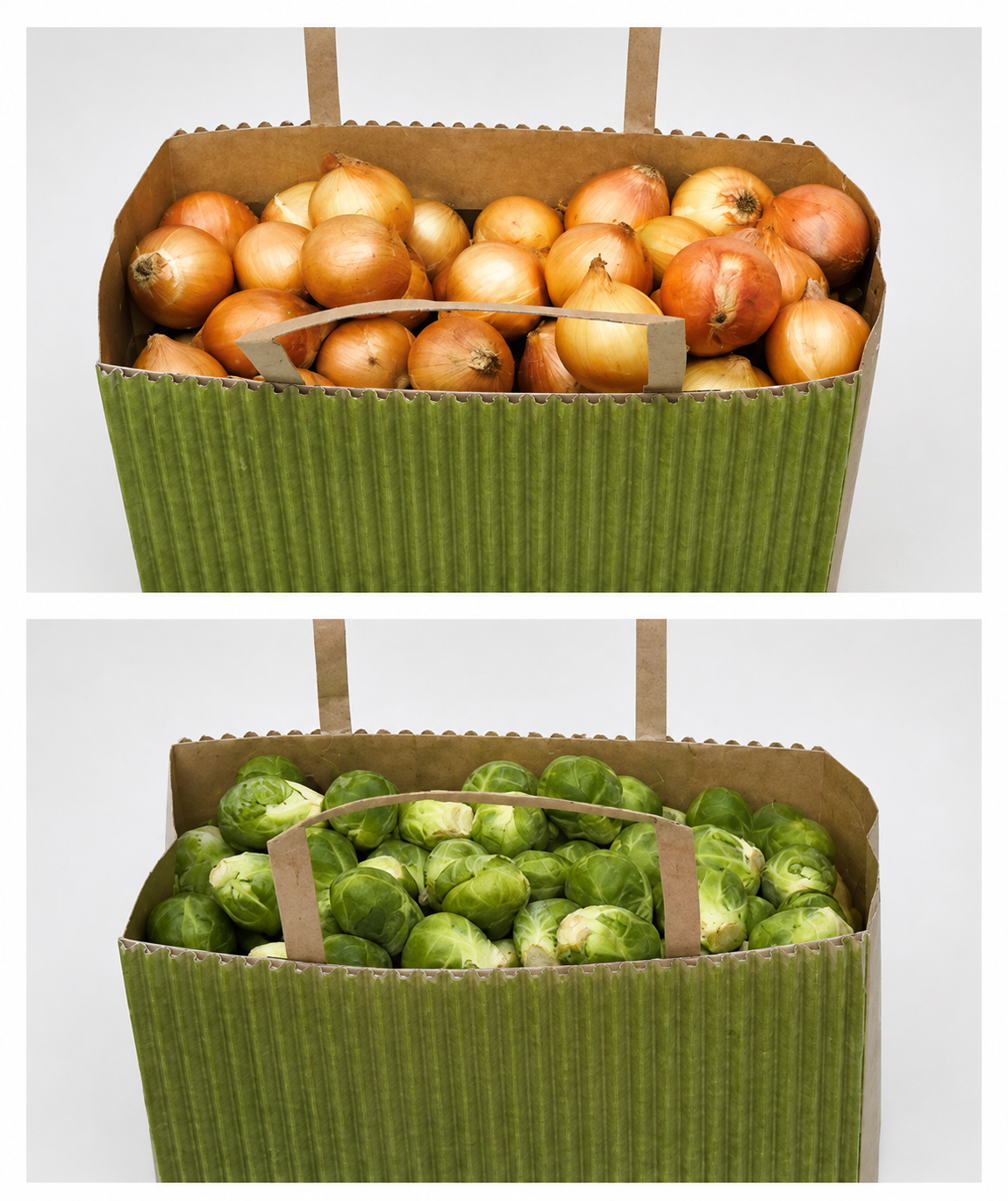
The project UNE — The Agricultural Texture was developed by Asahi Ito with Kenya Hara and the Musashino Art University seminar in 2007 and published in Ex-formation Plants in 2008. It observes plants from a new point of view and shows how a familiar subject can become unfamiliar again.
5. Design Ah! Exhibition — Taku Satoh
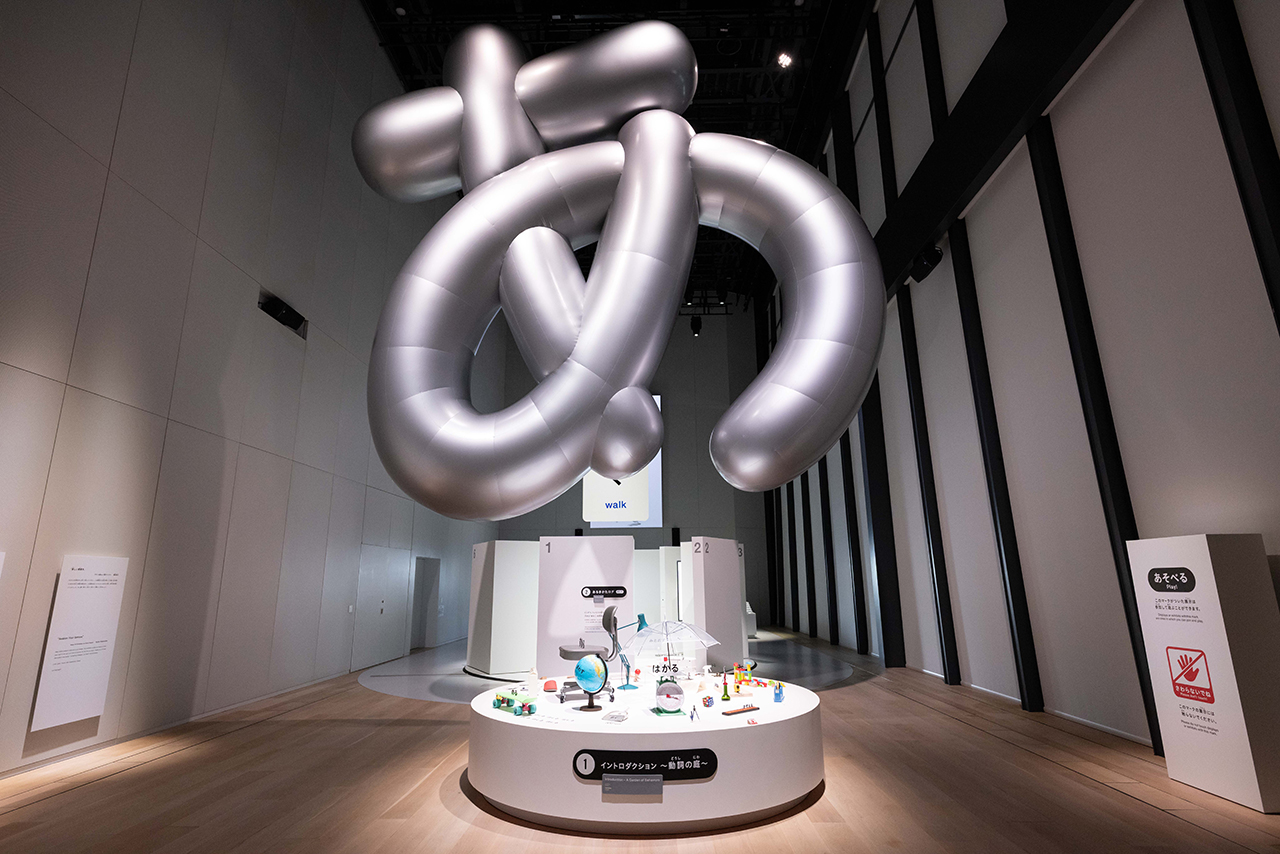
The 2013 Design Ah! exhibition at 21_21 DESIGN SIGHT examined everyday objects from different points of view. Directed by Taku Satoh, with interface and video work by Yugo Nakamura and music by Keigo Oyamada, the exhibition made ordinary things visible in new ways.
The Way of Thinking: Finding the Hidden System
6. On Growth and Form — D’Arcy Wentworth Thompson
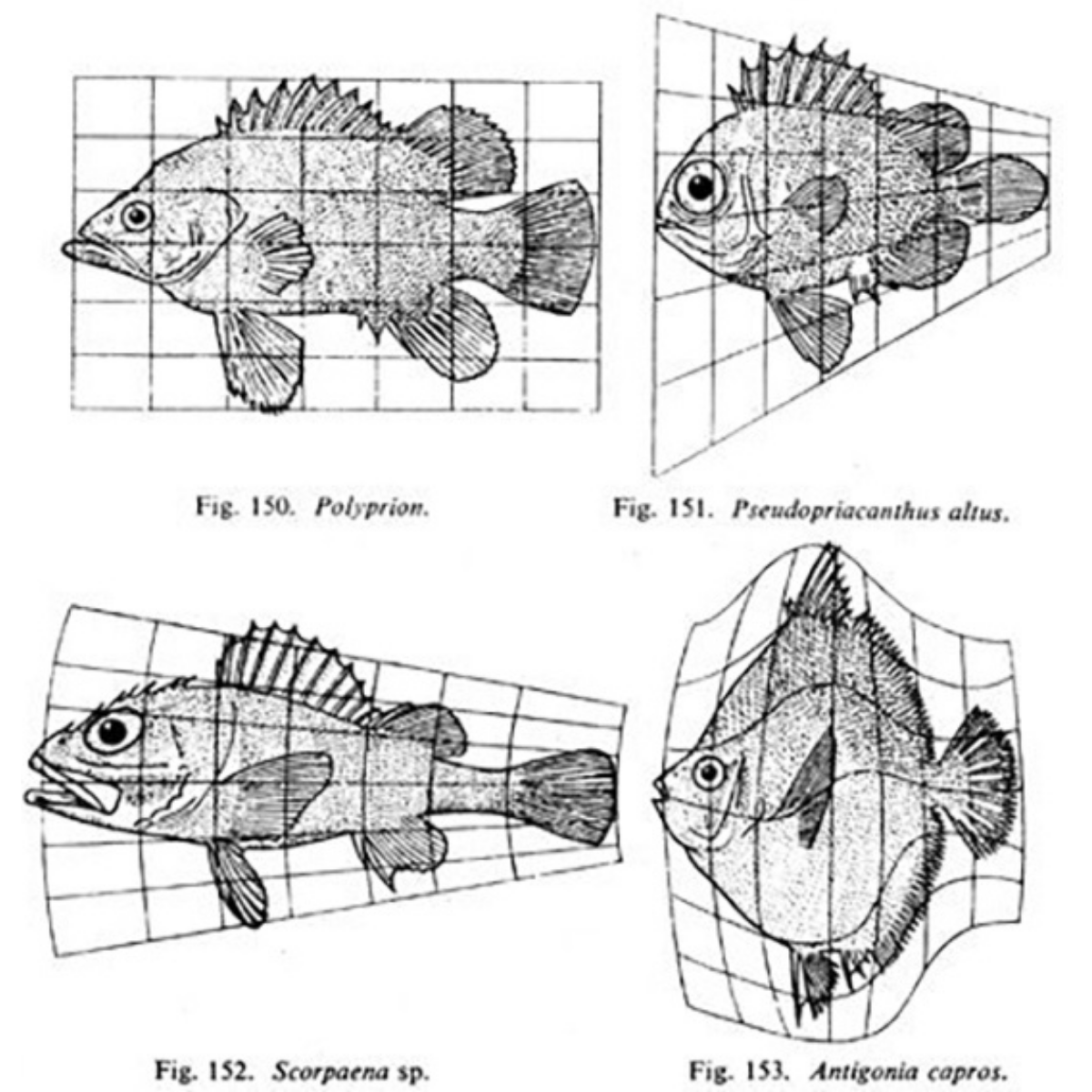
D’Arcy Wentworth Thompson’s 1917 book On Growth and Form uses geometry and mathematics to study the forms of living things. It demonstrates that visible forms may be understood through underlying systems and transformations.
7. How to Hack a Painting — Tyler Hobbs
Tyler Hobbs studies a painting and attempts to understand its visual rules through code. This generative art experiment connects artistic style with algorithms and shows how a visual language can be investigated as a system.
Read How to Hack a Painting
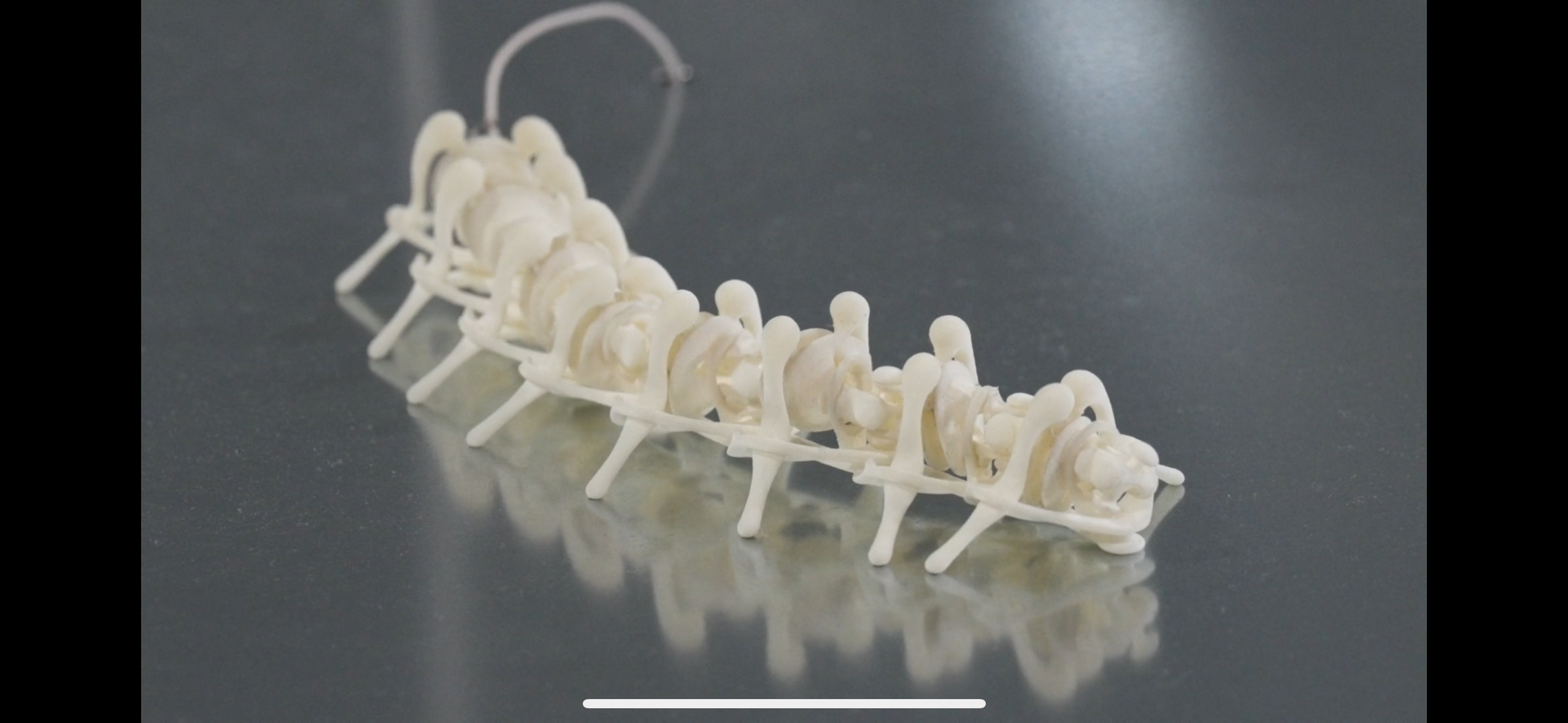
8. READY TO CRAWL — Yamanaka Laboratory and Shunki Niino
READY TO CRAWL studies movement inspired by living organisms. The project suggests how designers can observe natural behavior and translate it into the motion of a designed object.
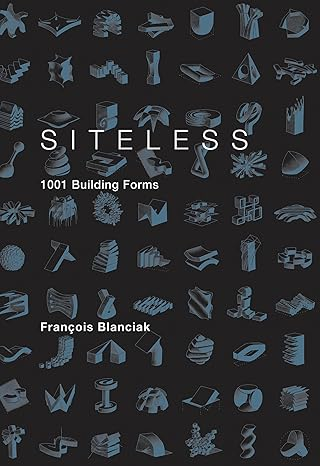
9. Siteless: 1001 Building Forms — François Blanciak
Siteless collects one thousand and one possible building forms through simple architectural drawings. The book demonstrates how a limited visual system can generate a large range of formal possibilities.
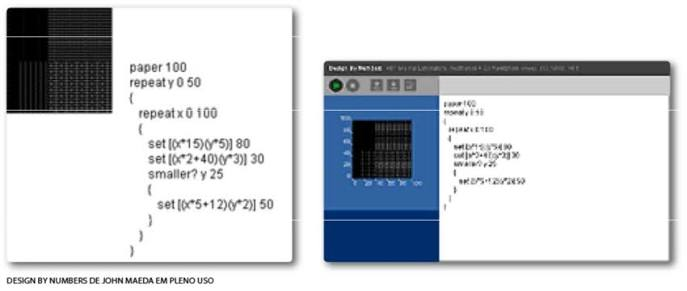
10. Design By Numbers — John Maeda
John Maeda created Design By Numbers at the MIT Media Lab in 1999 as a programming language and educational system for computational design. Instead of separating programming from design, the system teaches code through visual making. I am interested in creative coding as a way to think and learn.
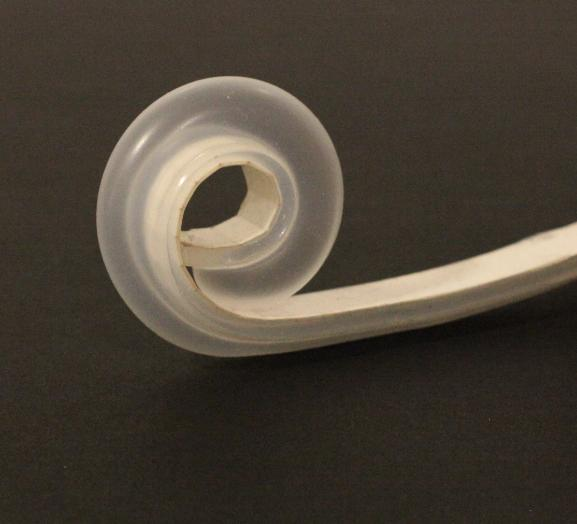
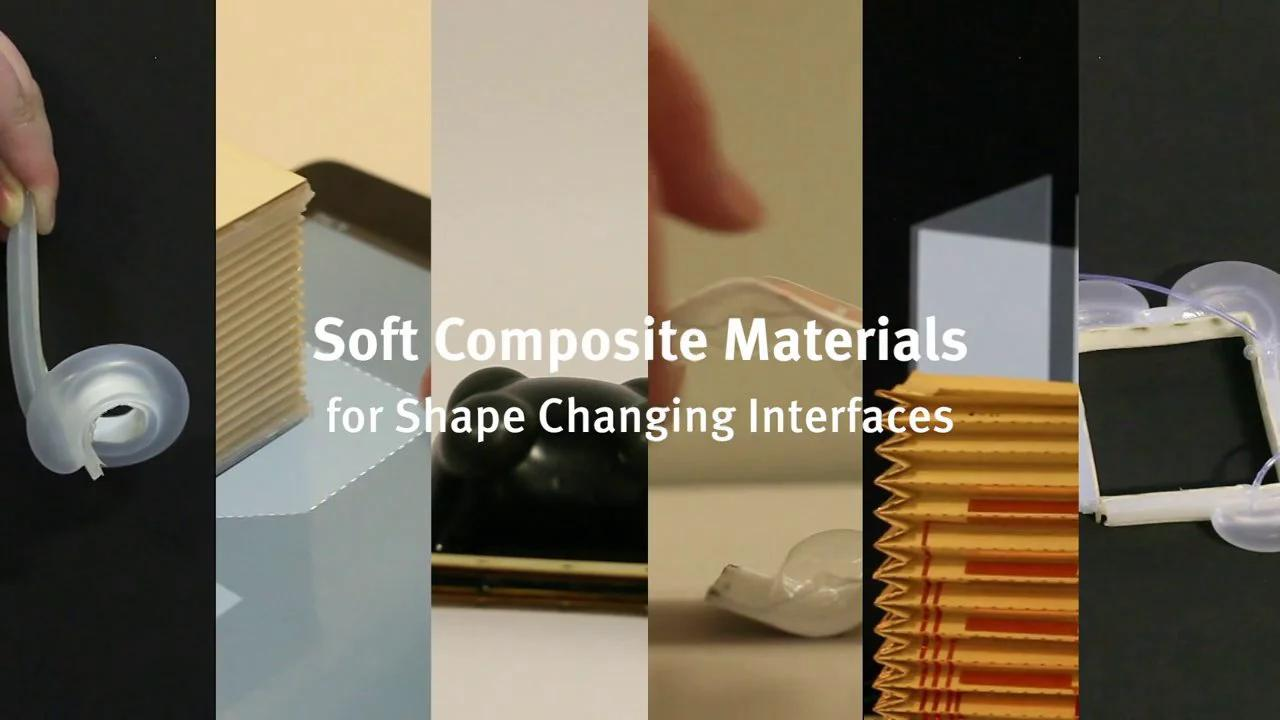
11. PneUI — MIT Media Lab
Developed by Lining Yao, Ryuma Niiyama, Jifei Ou, Sean Follmer, Clark Della Silva, and Hiroshi Ishii, PneUI explores soft materials controlled by air. The project shows how pneumatic changes can shape both the form and behavior of a material.
The Way of Making: Making New Connections
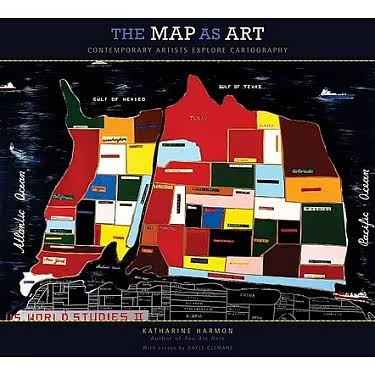
12. The Map as Art — Katharine Harmon
Katharine Harmon’s 2009 book The Map as Art presents contemporary artistic approaches to cartography. These works show that maps can represent not only locations, but also ideas, experiences, and imagination.
13. Muuratsalo Experimental House — Alvar and Elissa Aalto
Alvar and Elissa Aalto used the Muuratsalo Experimental House to test bricks, construction methods, and material arrangements. The architecture therefore operates as both a building and an ongoing material experiment.
Read about the Muuratsalo Experimental House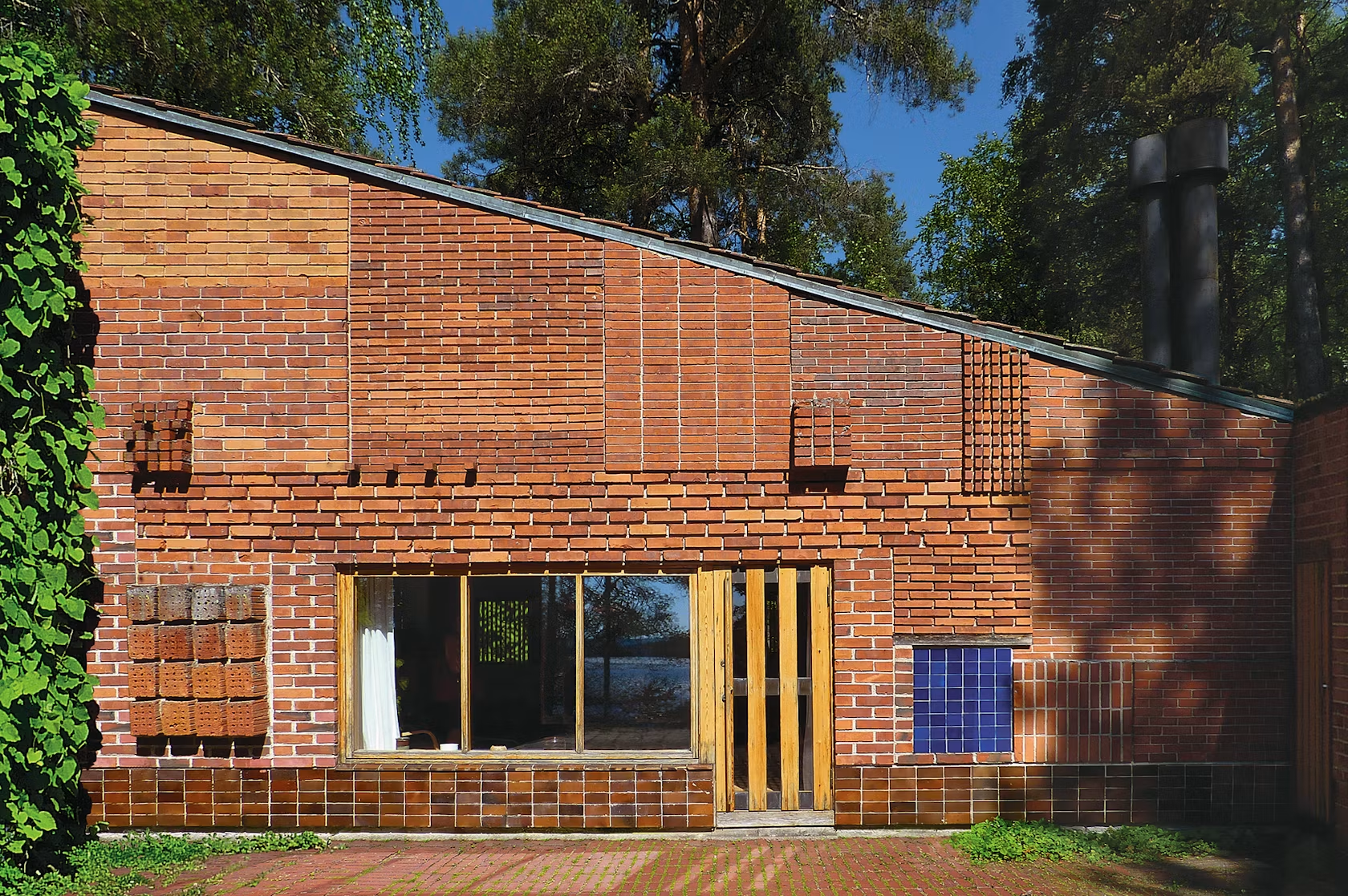
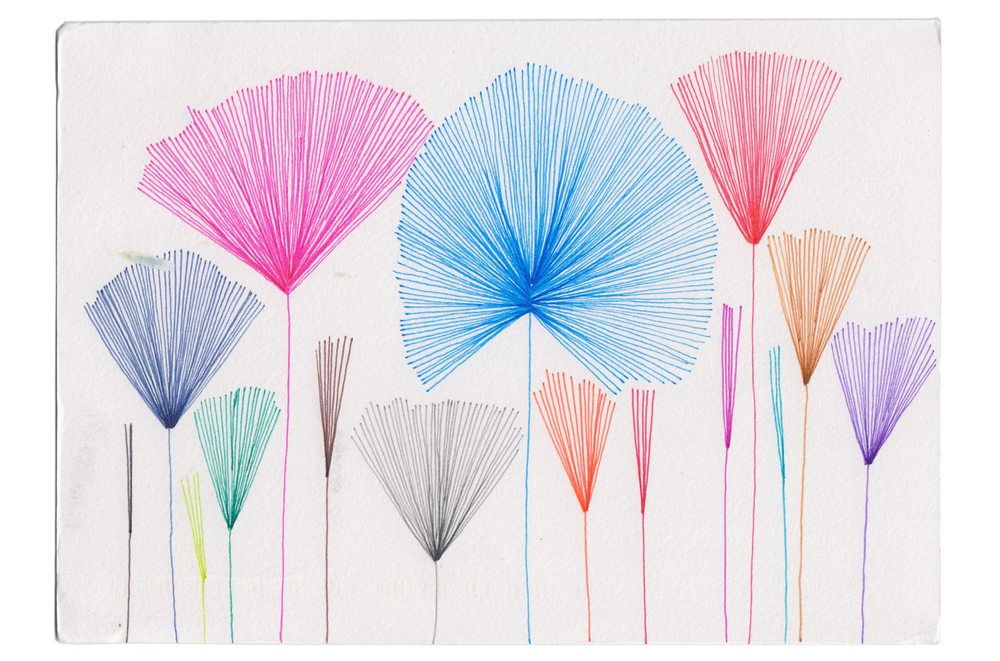
14. Dear Data — Giorgia Lupi and Stefanie Posavec
Dear Data transforms details from daily life into hand-drawn data visualizations. The project connects personal experience, data collection, drawing, and correspondence.
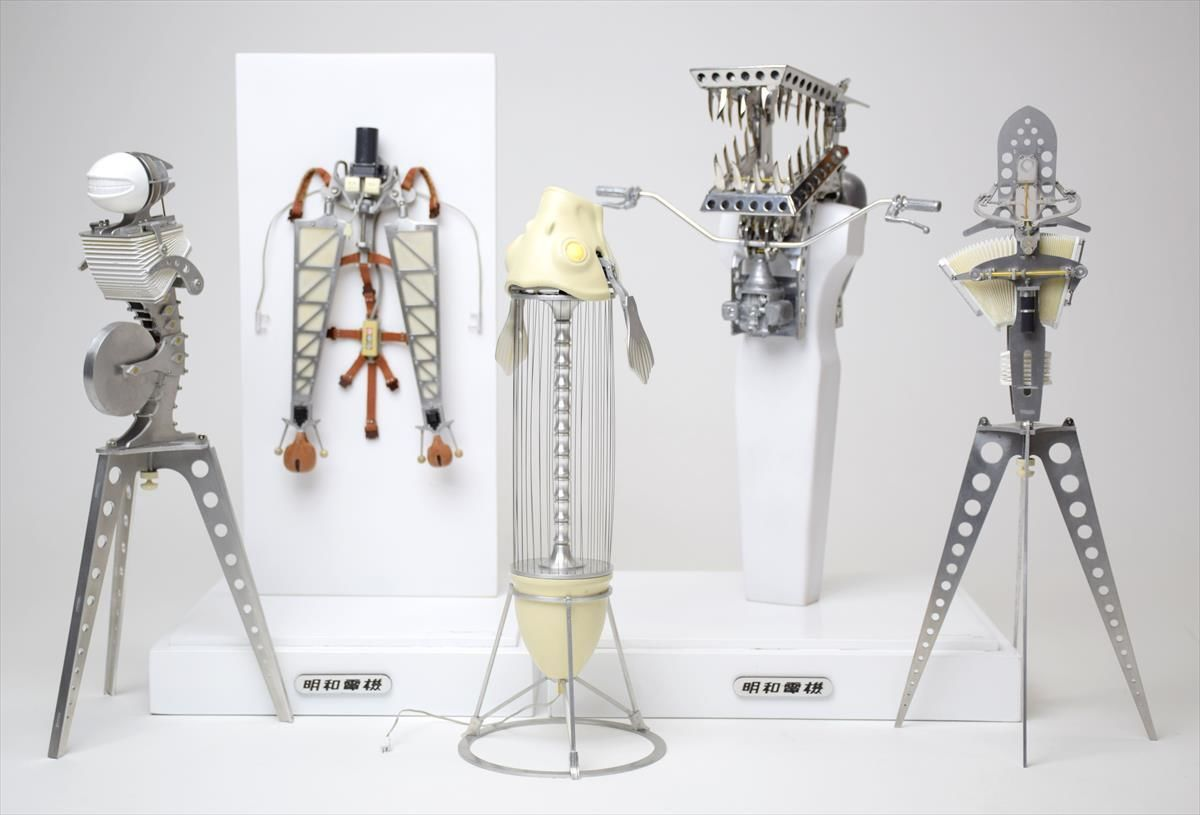
15. Maywa Denki Instrument Series
Maywa Denki’s TSUKUBA Series combines electromechanical machines, physical movement, performance, and music. The instruments demonstrate how engineering systems can become expressive and playful objects.
Visit Maywa Denki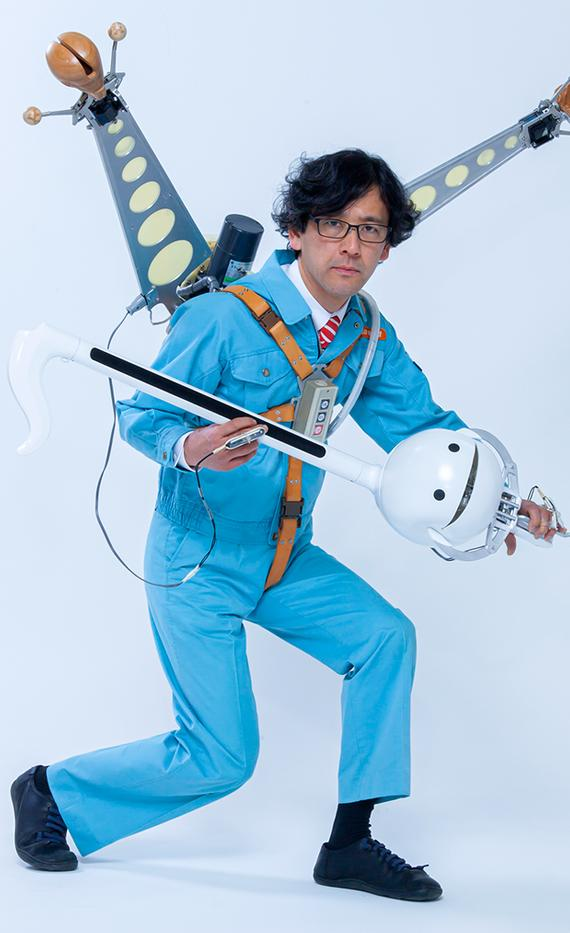
16. Breeze of Light — nendo
Created by nendo for Daikin during Milan Design Week 2019, breeze of light connects material movement with illumination. The installation shows how light can change the perception and emotional quality of a simple material.
View Breeze of Light on nendo’s website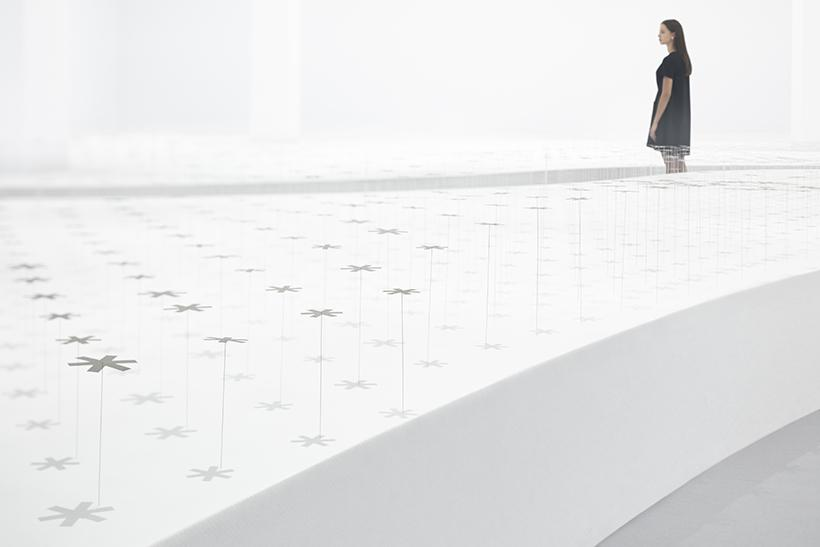
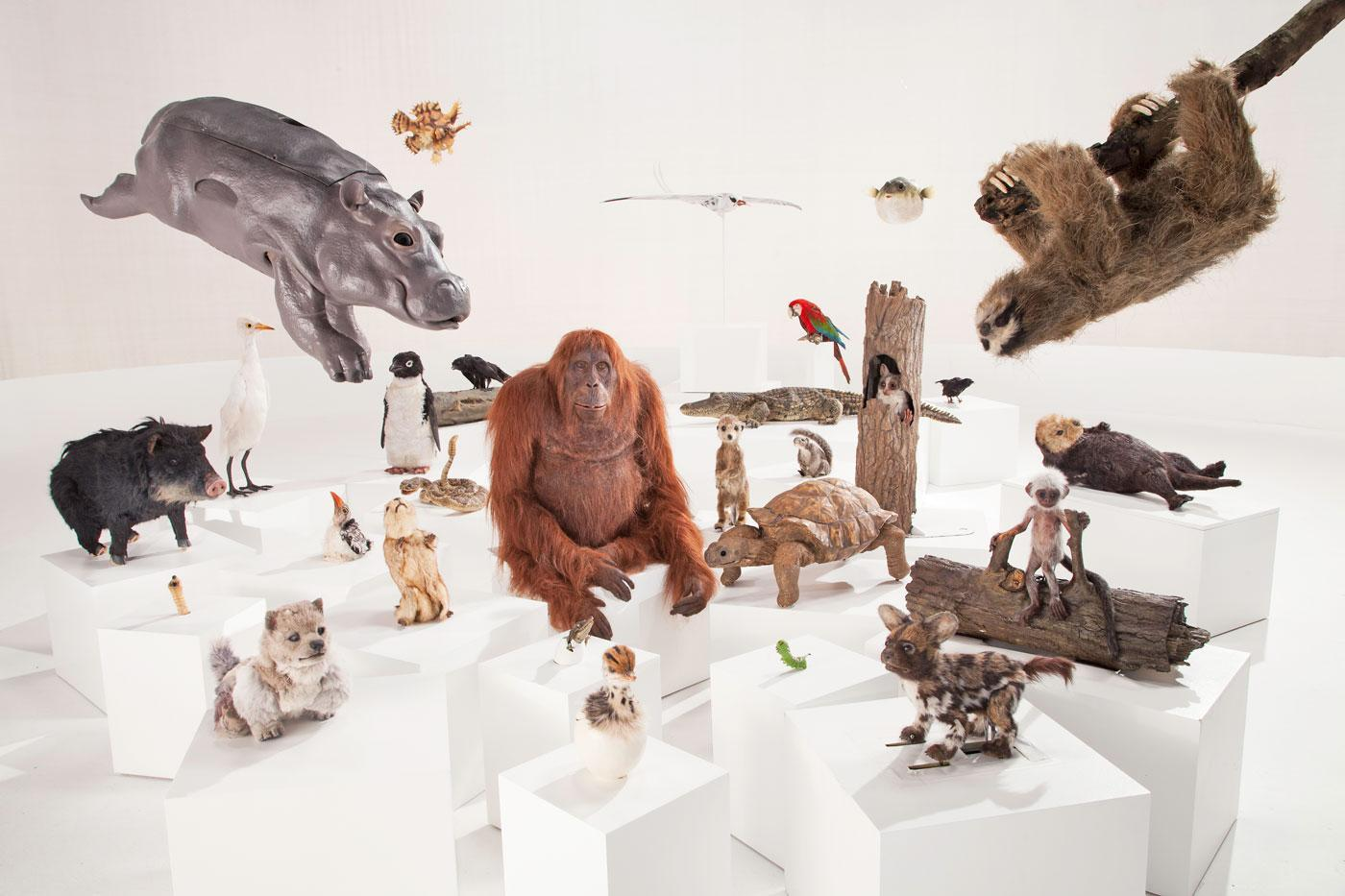
17. BBC Spy in the Wild
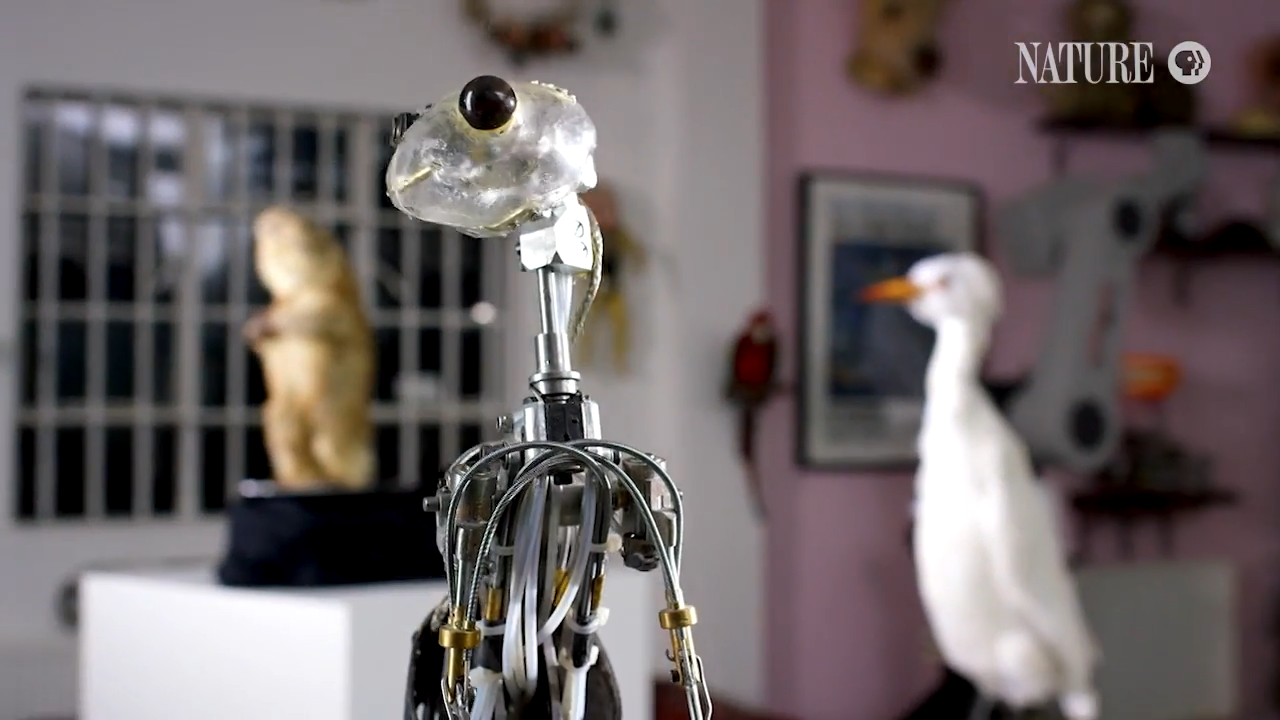
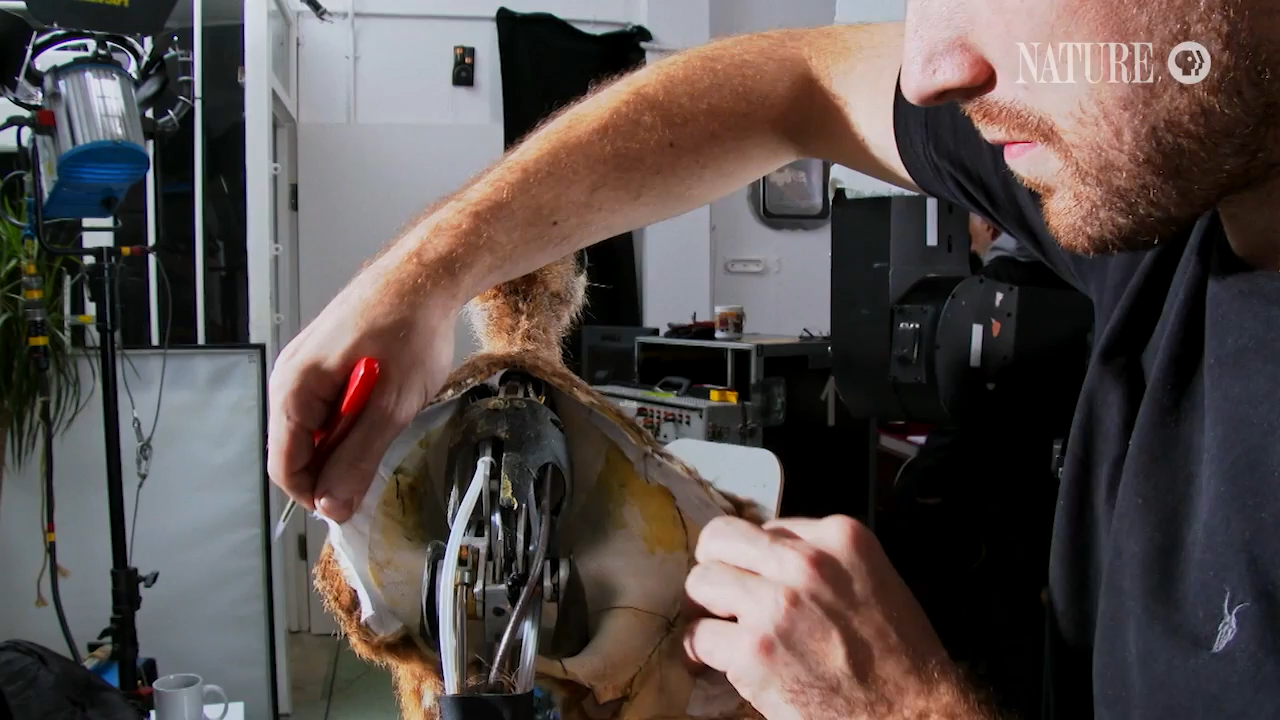
The BBC documentary series Spy in the Wild uses animal-like robotic cameras to enter animal environments and observe behavior at close range. It creates an unusual connection among animals, machines, documentary filmmaking, and observation.
18. Kemono — o+h
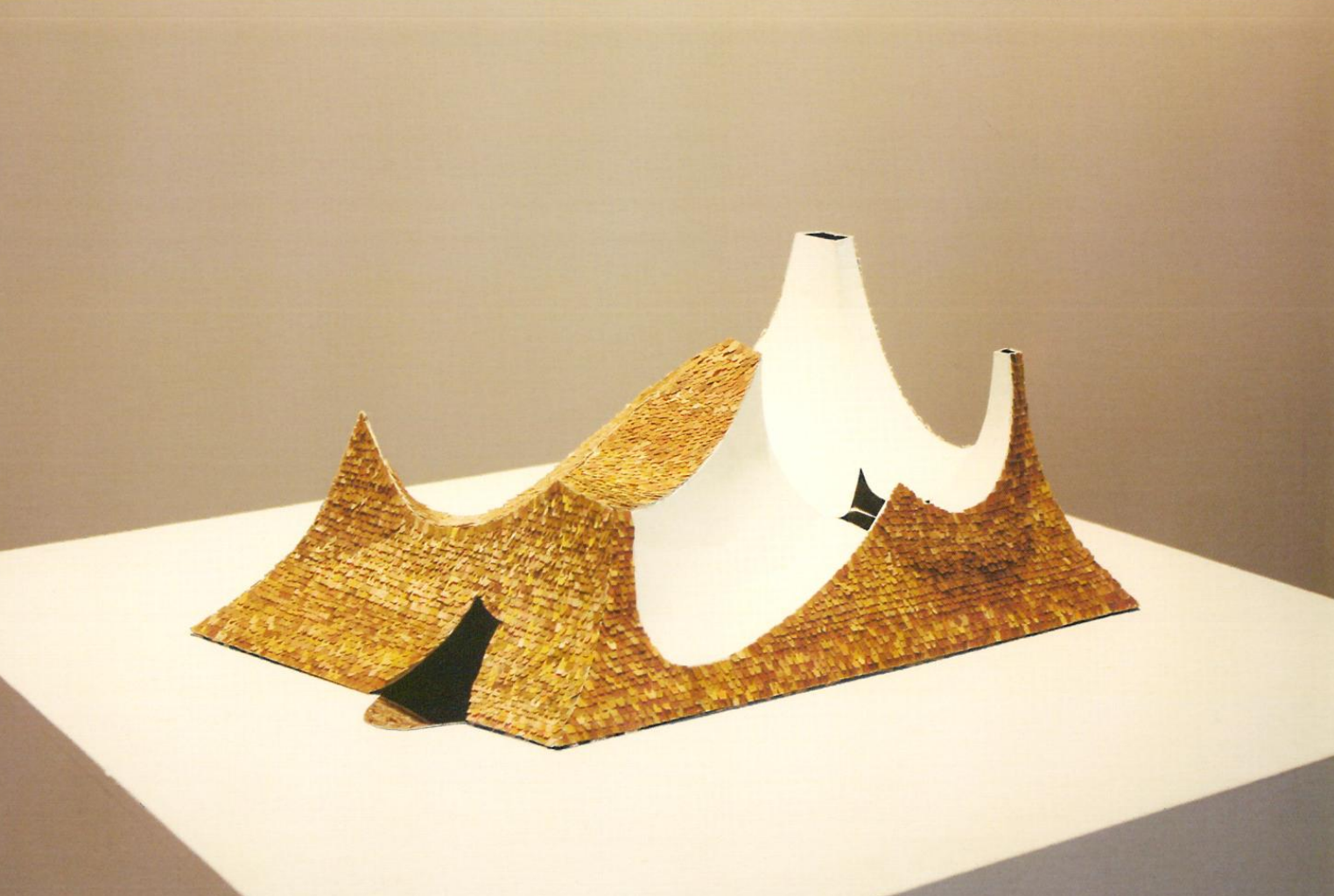
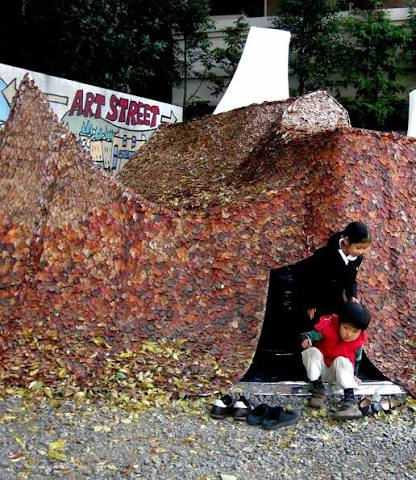
Maki Onishi and Yuki Hyakuda of o+h created Kemono as an architectural installation for the 2008 Double Chronos exhibition in Tokyo. Fallen leaves become the material for a small structure, connecting natural matter with architectural form.
19. XR STUDIO — Nikken Sekkei Digital Design Lab
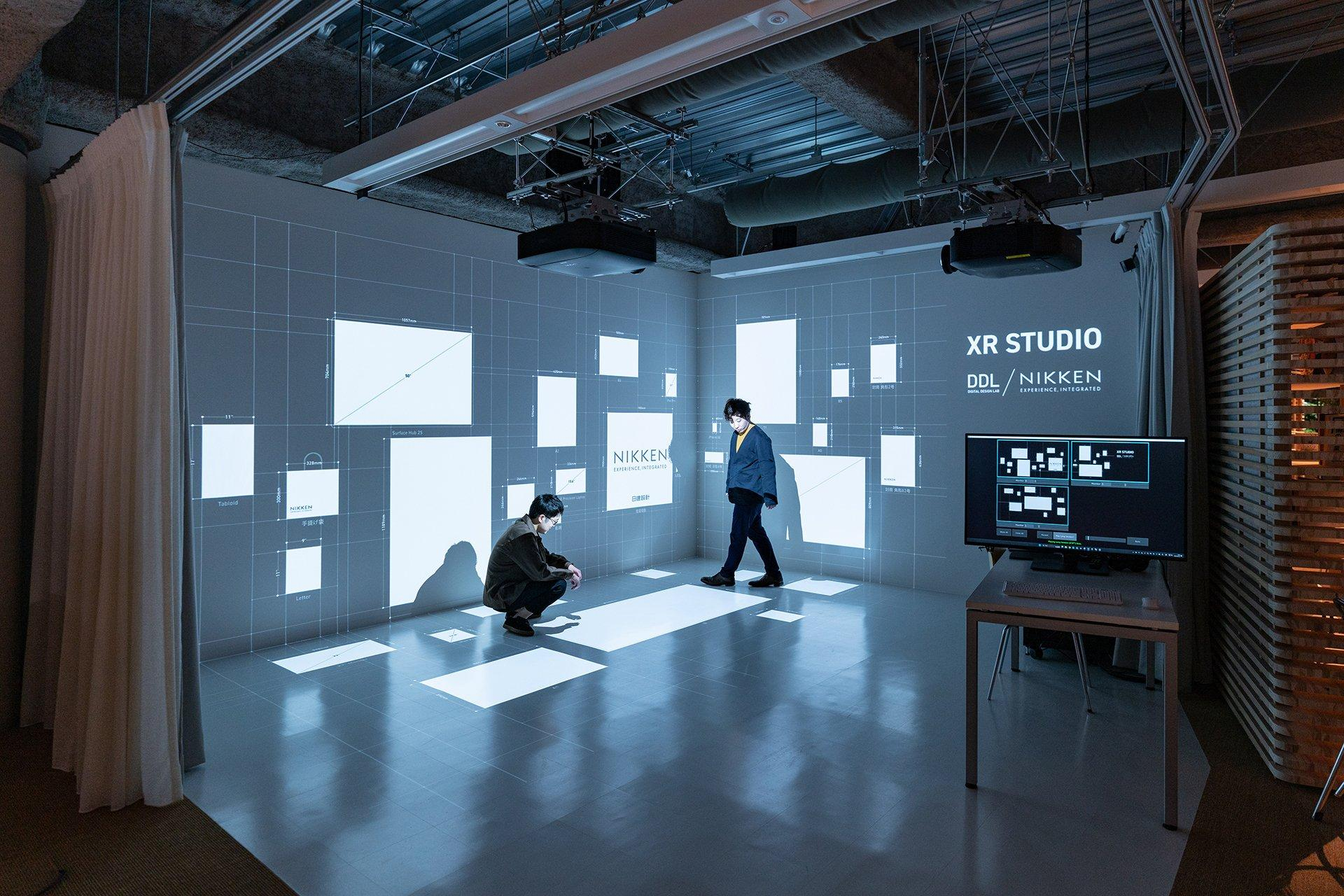
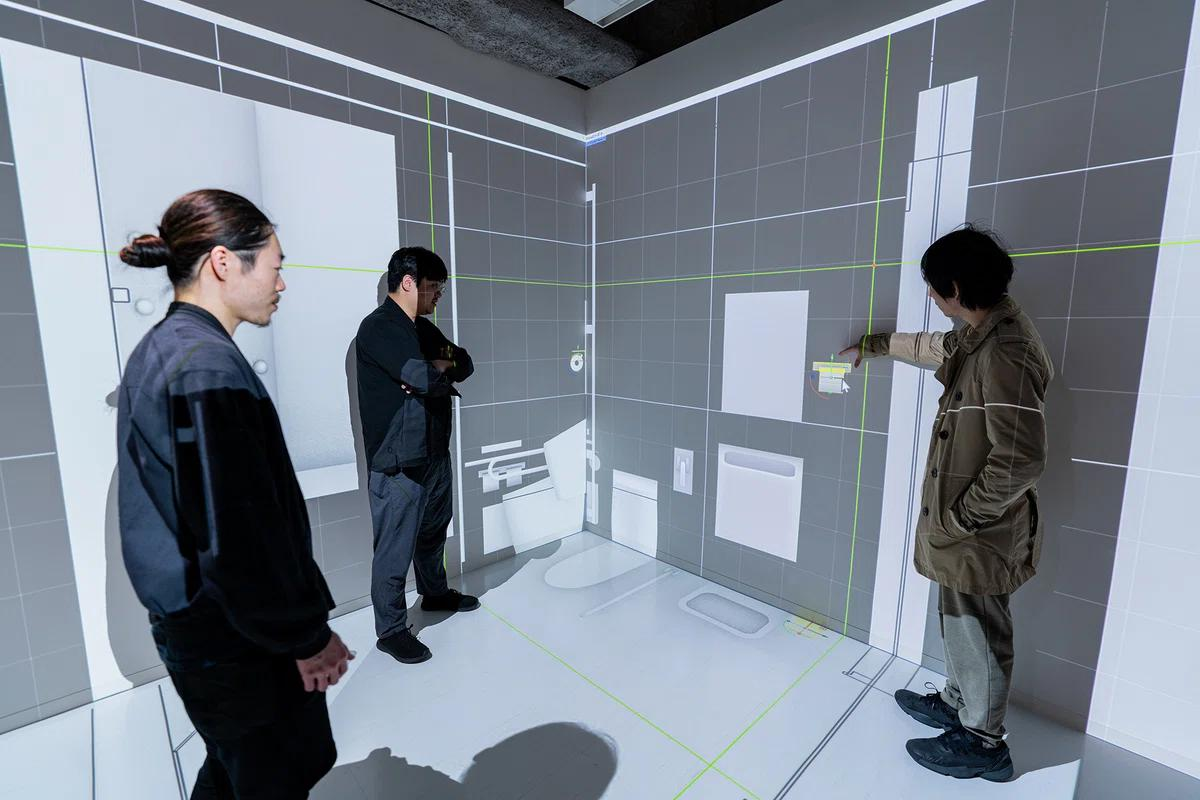
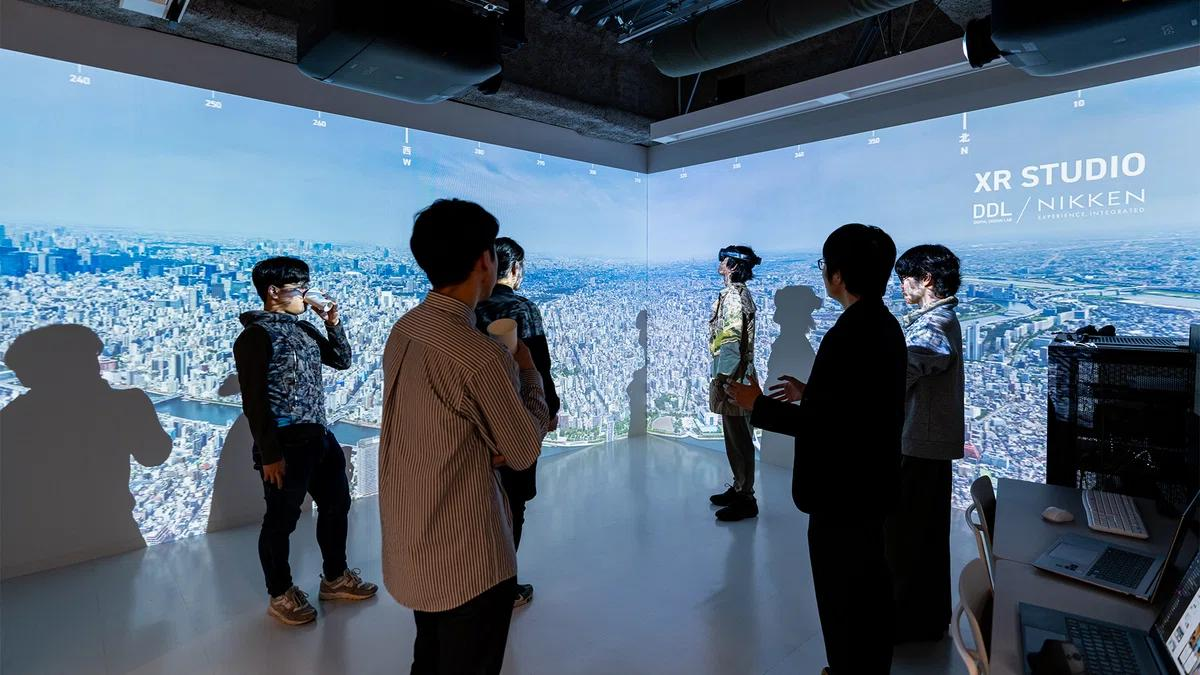
Nikken Sekkei’s 2023 XR STUDIO uses extended reality to present architectural space at full scale. The project helps designers and viewers understand spatial dimensions before construction and explores how digital technology can change the experience of physical space.